Marketing
Beyond the booth: How energy marketers can maximize special event opportunities
For energy industry marketers, conference season can feel like a treadmill — endless events, mounting costs, and elusive results. The challenge isn’t access, but deciding where to show up and what’s truly worth your time and budget.
The companies winning at event marketing aren’t necessarily the ones with the biggest budgets, but those that strategically prioritize events, carefully design their presence, and clearly define success.
Pick the right events
The biggest opportunities often live at the industry’s largest gatherings, but size alone isn’t a strategy. Successful event marketing begins with finding the right audience. Jordan Ponizhaylo, Senior Events Manager at Kraken, an AI-driven operating platform that helps utilities manage and optimize energy systems, recommends evaluating large events based on attendee volume, seniority, and job function.
“You really need to be careful to dig in and make sure that it’s a perfect fit, because that’s the best way to make the biggest impact,” Ponizhaylo said.
That philosophy led Kraken to scale back from more than 50 annual events to roughly ten. “What we’ve learned over the last few years is that it really is quality over quantity,” she said. For Kraken, DistribuTECH (DTECH), one of the energy industry’s largest annual gatherings, sits at the top of that list.
Own the room
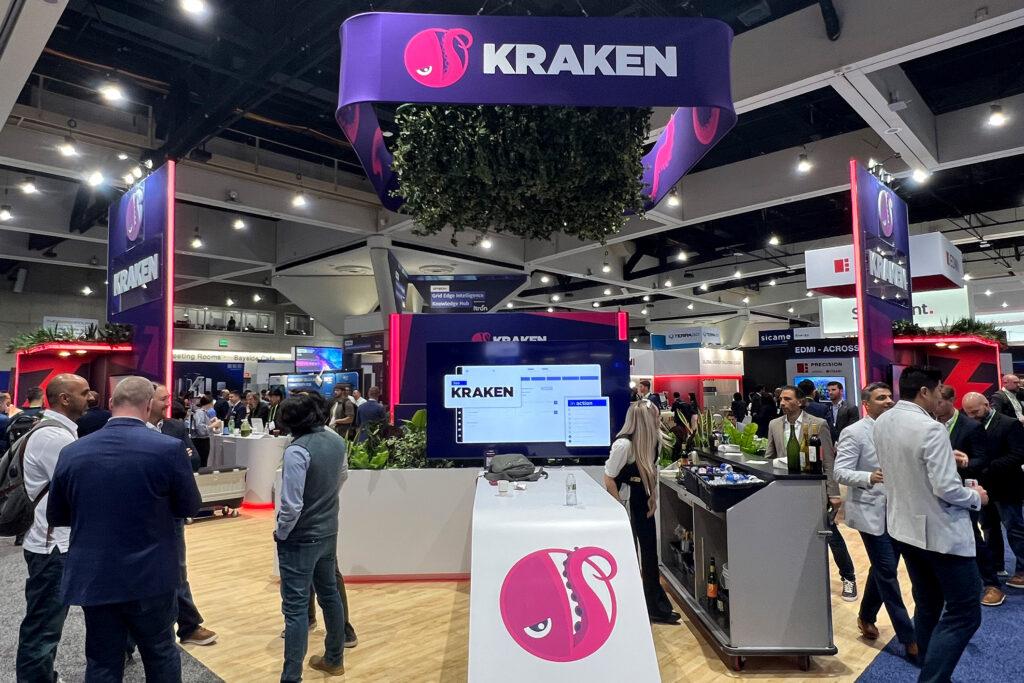
Sponsoring large-scale networking events is one of the most effective ways to get your brand in front of an entire industry at once. When you host, you set the tone. Not all attendees will be decision makers, but brand recognition builds through exposure, and a well-run event introduces your company to people who will encounter your brand again down the road.
Kraken leans into this model at DTECH by hosting the conference’s official networking reception. “You have everybody in the room that you want to talk to and that you want to make connections with,” said Ponizhaylo.
Build the experience
Major conferences offer tiered packages to reach a wide range of sponsors. Too often, marketers accept these without considering if they serve their goals. A more effective approach is to shape opportunities around what drives value for your company — this mindset shift can significantly improve your event ROI.
“There’s never anything wrong with saying, ‘Is there a way that we can forego branded napkins and instead have a five-minute welcome speech?’” Ponizhaylo said. Building relationships with event organizers over time creates even more flexibility — opening the door to customized activations.
Sweat the details
Large events are complex, and even the most creative strategy will fall flat without the necessary infrastructure. Create a single source of truth for all logistics — agendas, booth staffing, meeting schedules, target attendees, and RSVPs — and conduct pre-event planning calls to align on goals, target accounts, and the competitive landscape so your team arrives prepared.
“It’s not a one-person show,” Ponizhaylo said. “You’re relying on your vendors, your organizers, your internal teams — communication is key.”
Measure what actually matters
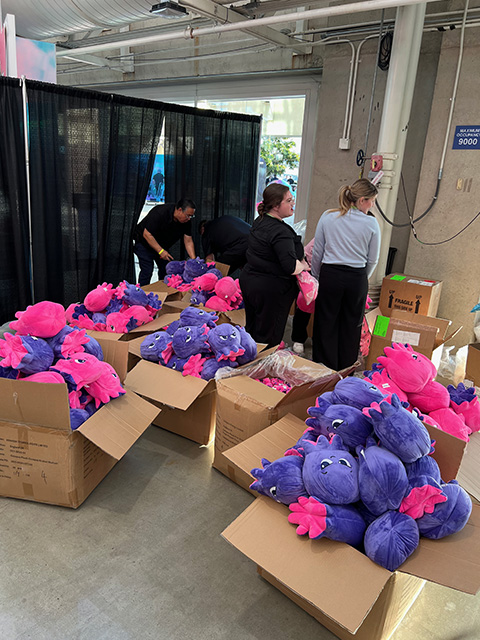
Proving event ROI requires layering short-term metrics — booth traffic, marketing-qualified leads, sales-qualified leads — with longer-term indicators, such as brand engagement. Look for creative ways to quantify experiential elements, too. Kraken gives away branded plushies in exchange for charitable donations — a tactic that generates goodwill and provides a concrete measure of engagement.
 Make it worth showing up
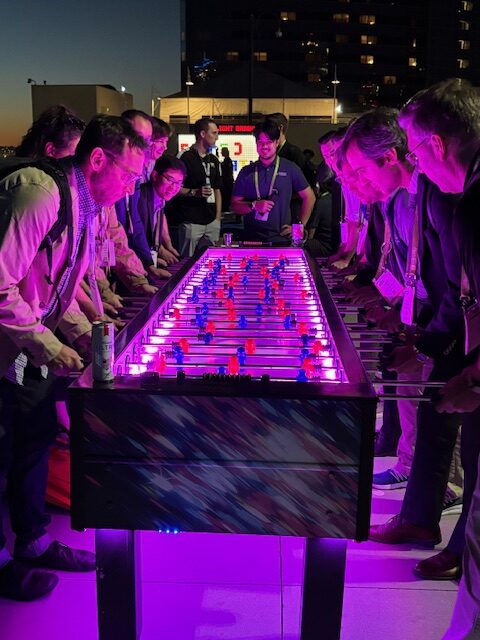
Strategy only gets you so far. “It needs to be an attractive enough event that people are going to want to attend,” Ponizhaylo said. “Make it really fun.”
That means entertainment and energy, but also warmth. “A lot of people come to these events alone or for the first time,” she noted. “These networking events are a great way to make people feel included and welcomed.”
The bottom line
The energy companies getting the most out of event marketing have stopped trying to be everywhere. They show up deliberately, invest where it counts, and create experiences — and relationships — that outlast the event itself. That’s what turns a conference event into a competitive advantage.